
curating a commonplacing practice
on why and how I keep my commonplace book

I’ve been commonplacing since childhood, long before I had a word for it. I always loved setting myself ‘projects’. I would pick a topic (iguanas, Osiris, Boudica), acquire a notebook (possibly a school jotter I had managed to take from a classroom cupboard), and task myself with ‘researching’ said topic. I would use our chunky family PC to search online, or more often find books in the children’s section of the local library to copy down facts in slow, deliberate pencil. I’d glue in images printed on floppy paper to illustrate them, and would probably consider myself a bona fide expert on the topic for a few days before I’d move on to something else. Given that there were only so many jotters I could nick without getting caught, multiple topics inevitably ended up squashed into the same notebook. My first, accidental commonplace book.
1. What is a commonplace book?
A commonplace book is simply a personal notebook where you collect passages, quotes, and fragments from different external sources. This could be compiled from pretty much anywhere: passages from books or articles, song lyrics, poems, speeches, film or TV scripts, even snippets from overheard conversations. What I love about this system is that every commonplace book is unique to its creator, forming a sort of messy personal encyclopedia. The only rule is simple: if you find something interesting or worth remembering, it can go in.
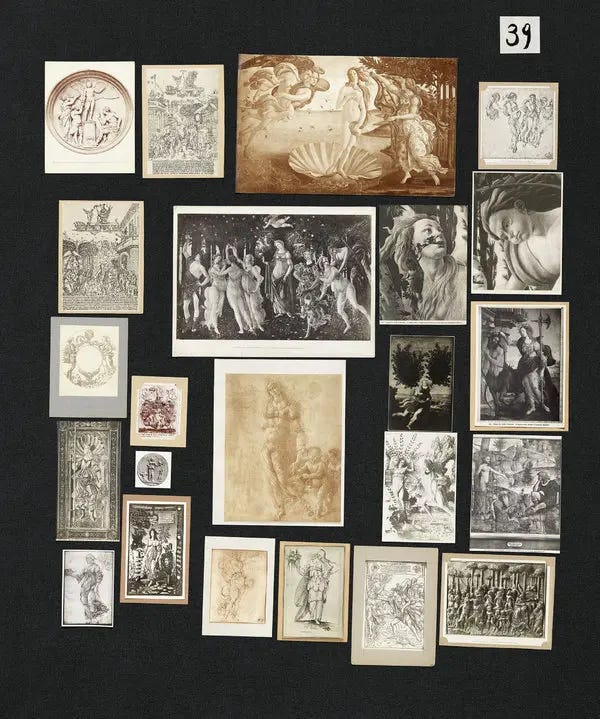
People have been commonplacing for many hundreds of years1. There’s something very human about wanting to pull together the snippets that spark our interest, and to make a place of our own for them to live. When I heard the term ‘commonplacing’ in a YouTube video a few years ago, I immediately recognised that this was what I had been doing in my childhood bedroom so many years ago. Virginia Woolf captures this impulse beautifully2:
Let us take down one of those old notebooks which we have all, at one time or another, had a passion for beginning. Most of the pages are blank, it is true; but at the beginning we shall find a certain number very beautifully covered with a strikingly legible hand-writing. Here we have written down the names of great writers in their order of merit; here we have copied out fine passages from the classics; here are lists of books to be read; and here, most interesting of all, lists of books that have actually been read, as the reader testifies with some youthful vanity by a dash of red ink.
(This quote also makes me feel better about the unfinished notebooks stashed in shoeboxes under my bed. If Virginia loved starting afresh in a new notebook before the last one was finished, then I’m happy to follow in her footsteps.)
How is this different from other kinds of journaling?
There’s no single “correct” way to keep a commonplace book, but for me, the key difference is this: it contains only snippets from external sources. I don’t reflect, generate ideas, or write anything original in it. I love to do these things in my other journals, and, of course, lots of people choose to do all of these things in one notebook. But I love the idea that this is my encyclopedia, a space for curation rather than creation.
2. Why I need a commonplace book now
I started commonplacing again a couple of years ago, after watching some journaling videos on YouTube, which reminded me of how much I loved the practice as a child. I realised I still love diving down rabbit holes on niche topics, but I’d lost the art of documenting this exploration on paper.
I find that having a space to note down the things that catch my interest makes me more curious. Copying down the text from a quick picture of an information plaque in a museum might lead me to read an online article to learn more about the topic. Writing out an excerpt from a novel I’m reading could prompt me to think more deeply about why that passage stuck out to me. While I don’t write this reflection down in my commonplace book, this type of curation does encourage me to follow the threads of my thinking, and therefore think more deeply.
This has also helped me to slow down my thoughts. It’s very soothing to copy things out by hand, and this takes time. I love nothing more than spending a solo evening in my commonplace book. The act itself is simple, but it creates a small pause, and provides a way of resisting the constant pull to move on to the next thing or be ‘productive’.
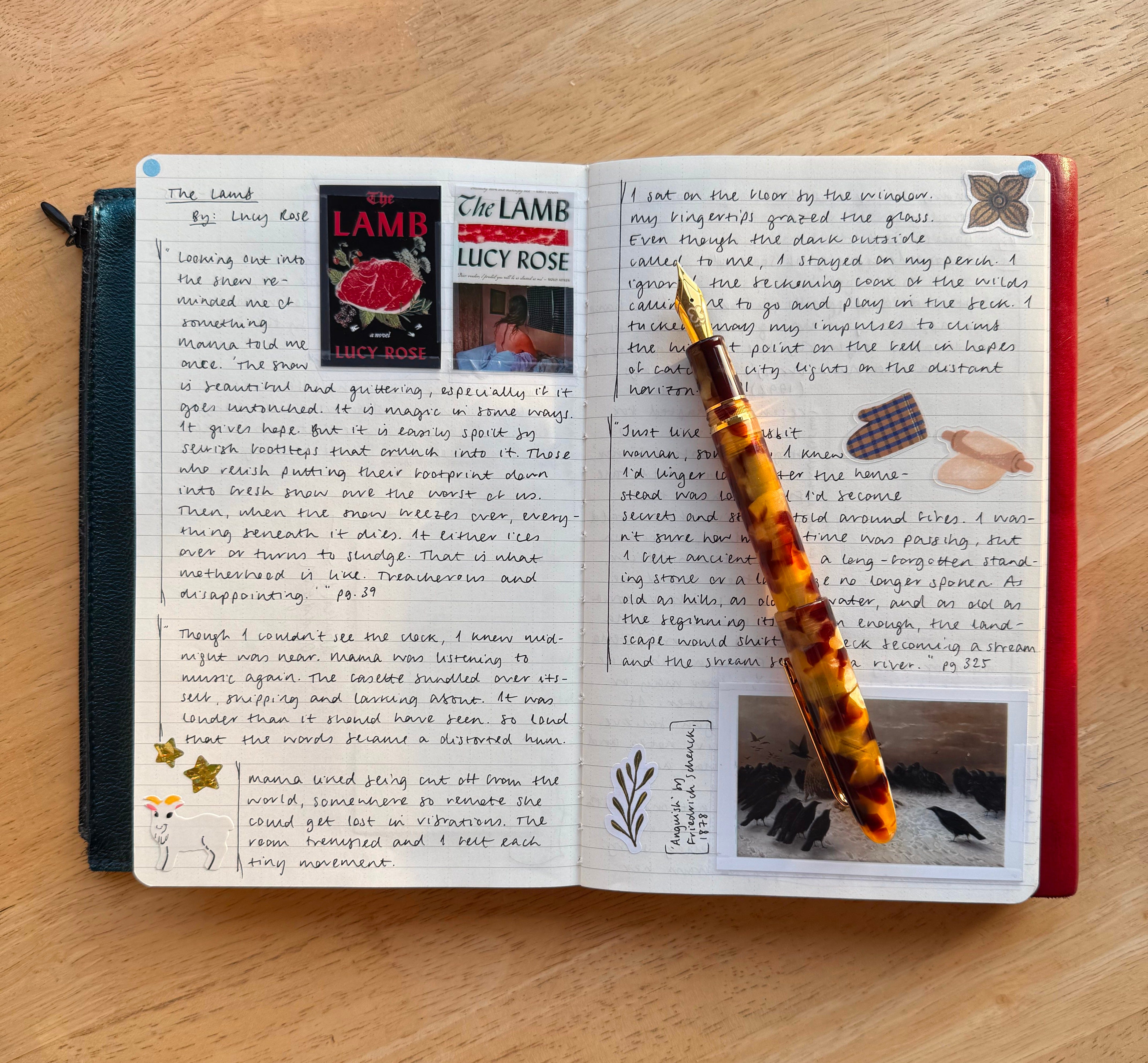
With this comes a sense of freedom and exploration. I don’t place any limits on what I commonplace about, but instead let my natural curiosity lead me. Some examples of recent entries include Irish mythology, 12th-century Korean ceramics, an abstract impressionist artist, a folk horror novel I loved last autumn, and the processing methods for different types of tea. There’s something very liberating about choosing to honour my niche, fleeting interests by spending time in my commonplace book. I recently wrote about why we should all worry less about being interesting3 and instead focus on what we are interested in. This is a key part of how I hold myself to this.
Perhaps most importantly, this has made me more confident in my own interests. A commonplace book doesn’t need to be impressive or useful to anyone else. It doesn’t have to cohere or justify itself. It simply reflects what I’ve been drawn to. Over time, that becomes its own kind of record.
That’s why I keep commonplacing now. Not as a project, or a system to optimise, but as a way to pay attention and keep the things I don’t want to lose.
3. My approach to commonplacing
Every commonplace book looks different. I have fallen into a bit of a rhythm in how I commonplace, which might be a starting point if you’re not sure where to begin. I tend to commonplace about a particular topic, but some entries come from books, films, conversations, etc. The following steps are more geared towards the former.
I keep a running list of topics I’d like to commonplace about in the notes app on my phone. I add to this whenever something captures my attention. I take accompanying screenshots or photos of interesting sources.
When I have a quiet afternoon or evening, I do an online deep dive to find related sources (websites, articles, YouTube videos, images). I like to print a few images to stick into the entry, so there’s something visual alongside the text.
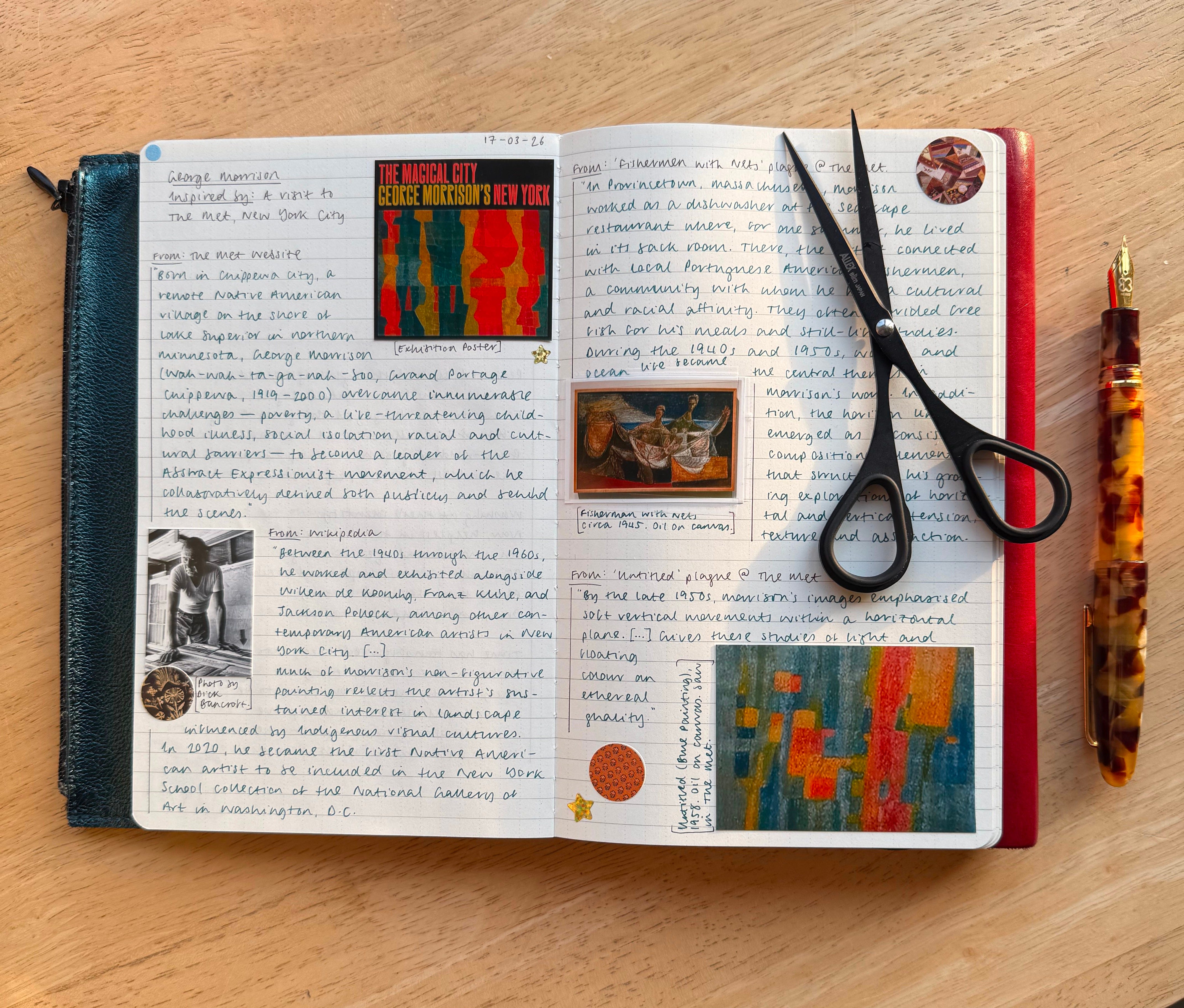
From there, I select the passages I want to copy out and make a note of where they came from. Once the entry is complete, I catalogue it using indexing dots, with different colours representing different categories (media, history, mythology, culture, theology, and so on). The categories themselves have evolved over time, based on what I find myself returning to most often.
4. My favourite commonplacing supplies
None of this is essential, of course. You could keep a commonplace book with a basic notebook and a ballpoint pen. But I am a lover of beautiful stationery, and I find this makes the process more enjoyable, and something I want to return to. I love the physicality of commonplacing, and sitting down with my collection of supplies makes it feel like a ritual.
A beautiful notebook is probably the most important thing. If I like how it looks and feels, I’m much more inclined to pick it up and spend time with it. My favourite budget notebooks are the Muji A5 slims. If you want to invest in something special, I highly recommend a paper republic leather journal.
I could talk about my favourite pens for days. In fact, I probably have talked about my favourite pens for days. Currently, I am obsessed with my Esterbrook Estie and my Muji 0.3 rollerballs.
I keep a pair of scissors and a glue tape (or sometimes just regular scotch tape) nearby for sticking in images and clippings. This is one of my favourite parts of the process, and it makes each entry feel a bit more tactile and lived-in.
A ruler is useful for keeping things vaguely neat, whether that’s underlining headings or dividing up the page. While I don’t aim for perfection, some structure does help.
I also use a mini printer to print out images or screenshots to include in my entries. I find this especially useful when my entry is about visual art.
Finally, I use indexing dots to catalogue my entries. Different colours represent different categories, which makes it easier to flick back through and see patterns over time.
*None of these links are affiliate links, and I don’t have any ongoing partnerships with the brands listed. I have previously been gifted journals from paper republic and collaborated with them on a paid partnership, and I have also been gifted a pen by Esterbrook (though not the one mentioned here). Everything listed above was purchased with my own money ★
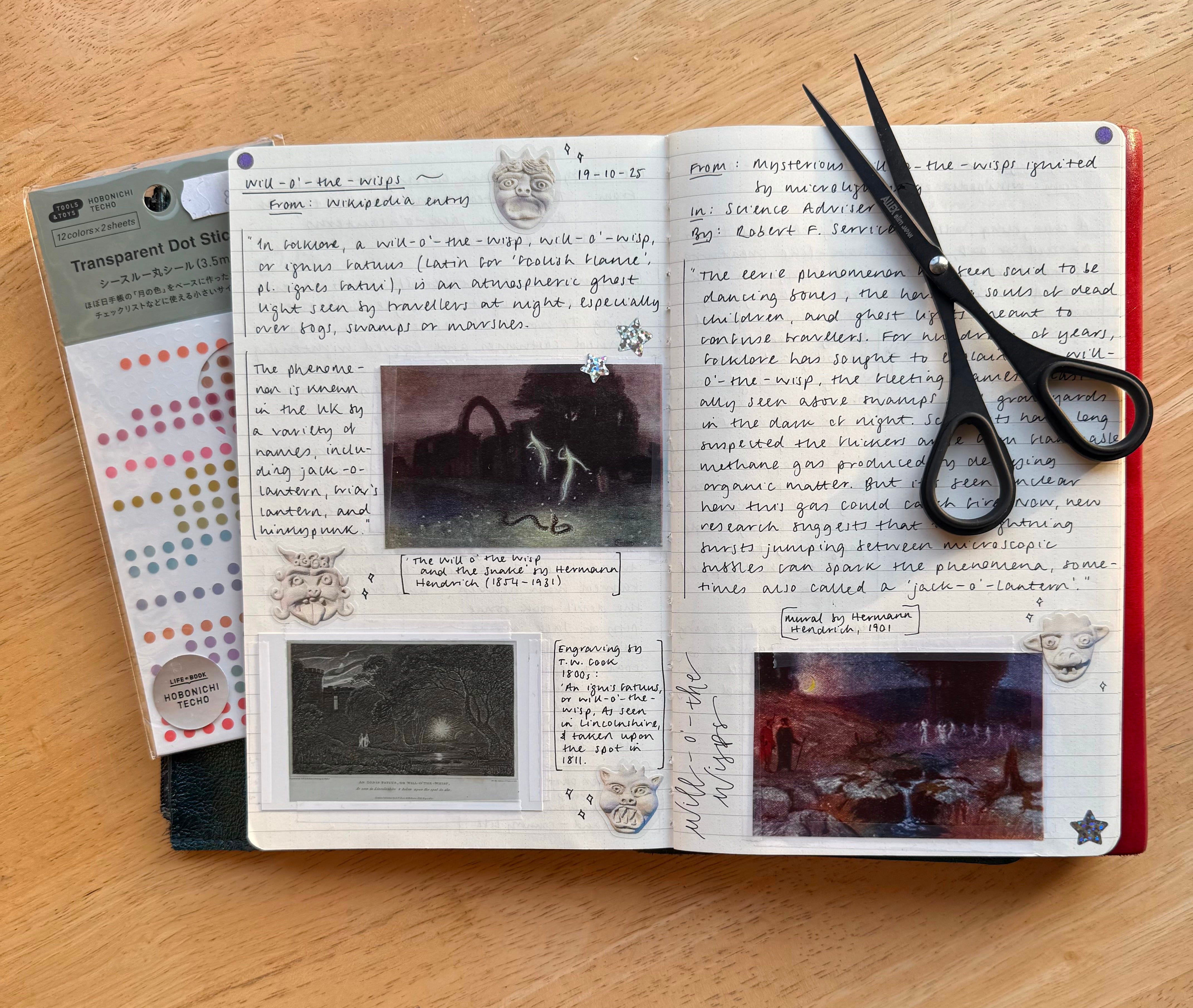
I like to think that, through commonplacing, I’ve returned to those childhood projects. Just with better notebooks and slightly neater handwriting. The instinct is the same: to follow what catches my attention, and to create a place to keep it.
Commonplacing isn’t a system I’m trying to perfect. It’s a way to encourage myself to notice more, and to hold on to the things I might otherwise forget. I’m sure my practice will evolve over time, but I can’t see myself stopping any time soon.
Commonplace Books: A History of Manuscripts and Printed Books from Antiquity to the Twentieth Century. Havens, Earle (2001). Yale University.
Virginia Woolf quoted in Littell’s Living Age, vol. 292, p281. Littell, Son and Company (1917).
Please Stop Worrying About Being Interesting. Published on 03-03-2026, @amycatriona
I've never really understood what commonplacing is (I've only heard of it briefly) but after reading this I realise I used to do it all the time as a child, like you. This might have to be something I return to, I think my mind would love it...
I’m just starting my commonplace journey so this was really helpful. Do you do an index in the front of your book or just do your dots?