
why you should keep a commonplace book in a digital world
reclaiming attention, curiosity, and memory in an age of overload

This is a follow-up piece to my recent essay, ‘curating a commonplacing practice’, where I outline what commonplacing entails and discuss my own practice ★
I love my commonplace book. I spend a lot of time in it, and I often write about it and discuss it with other commonplacing enthusiasts. People have been commonplacing for centuries, and a resurgence in the practice in the last few years has been reflected in (and spurred on by) a rise in conversation about it on social media.
For most of its history, commonplacing served the desire to collect, organise, and return to information which was difficult to come by: it was a way of making a copy of a source that wasn’t easily accessible, or would be otherwise impractical to obtain. But this modern resurgence has taken place despite having access to vast amounts of information on our phones. We can search, save, screenshot, and share information instantly. So why are we returning to tradition and writing things out by hand? Commonplace books are obviously still desirable and useful to many, but I have found myself asking: why?
The art of commonplacing has never been set in stone. In How Romantics and Victorians Organized Information, Jillian Hess writes that “the act of keeping a commonplace book is endlessly adaptable, with a form that has adjusted to new conceptions of knowledge, shifting economic structures, and developing technologies of print.”1 Her point is that commonplacing has always been rooted in the culture of its practitioners, and continually adapted to suit individual needs.
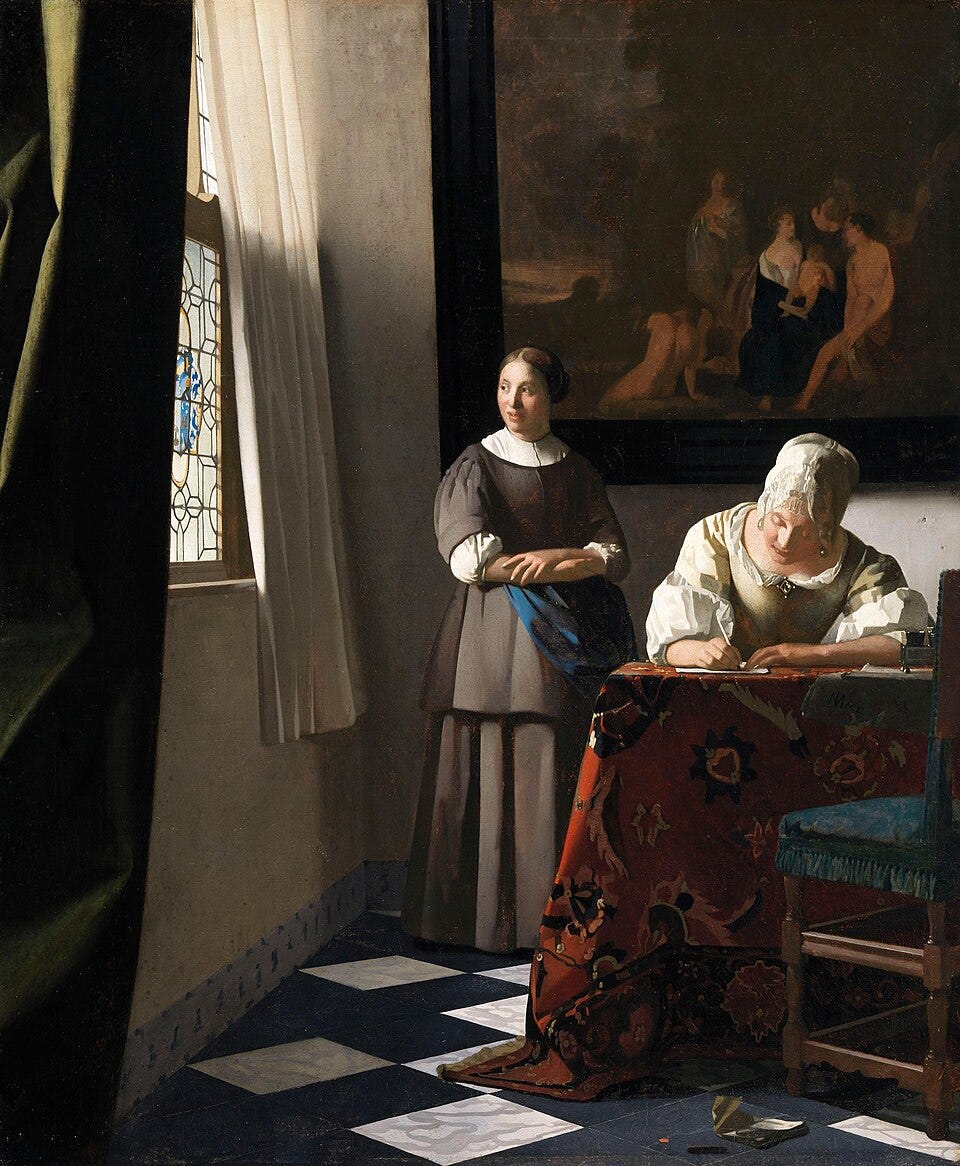
We’re living in a time when the problem of information scarcity has been flipped on its head. Rather than having to seek out information with great effort, we’re constantly bombarded with it through our devices. As soon as I wake up in the morning I check my social notifications (a terrible habit, I know), and can’t escape the breaking news push notifications already waiting for me. I spend most of my day looking at a screen, be that my phone, laptop, or iPad, and I’m horribly aware that my attention has become a commodity. Enormous companies profit from us spending as much time as possible on their platforms, often with real consequences for our wellbeing. Legal cases are beginning to reflect this, with a landmark trial finding Meta and YouTube liable in a social media addiction case just last week.2
In a small but powerful way, commonplacing helps me to do two things in the face of all this:
1. Commonplacing allows me to reclaim some control of my own attention.
Keeping a commonplace book has led me to be more intentional with what I pay attention to. Curating a collection of excerpts that I find interesting has allowed me to follow the threads of my own interest, rather than passively consuming what has been served to me by the algorithm. I’ve recently found myself reading up on will-o-the-wisps after seeing them referenced in Pixar’s Brave; I wrote an entry on the artist George Morrison after seeing his work displayed in The Met; I’ve read about the heron family of birds after spotting one from my window. I let myself commonplace about anything that piques my interest, and have found that to be a powerful tool for cultivating those interests and choosing what I spend my attention on. Sure, the commonplace book itself isn’t essential for this, but the practice gives me a sort of anchor for dedicating some time to it.
2. Commonplacing helps me to make sense of the information overload so I can process, learn, and remember.
When I write about something in my commonplace book, it feels starkly different to just watching a quick video or skimming an online article about it. Taking the time to physically copy out excerpts and to seek out sources that deepen my curiosity allows me to process what I’m reading. I think about why I find things interesting, and how they connect with my other interests. Being forced to slow down while I write something out by hand is a way of reclaiming some time and space to actually think, which feels like a real luxury in the modern world.
I don’t think I keep a commonplace book despite living in the modern world, but because of it. It gives me a small way of pushing back against the noise; I can choose what I pay attention to, and hold onto it long enough for it to mean something. In a world defined by speed and excess, the opportunity to do that feels increasingly rare.
How Romantics and Victorians Organized Information: Commonplace Books, Scrapbooks, and Albums. Jillian M. Hess, Oxford University Press. 2022. Introduction, pg. 3-4.
Campaigners welcome Meta and Youtube’s defeat in landmark social media addiction trial. BBC News, 25-03-2026. https://www.bbc.co.uk/news/articles/c747x7gz249o
I actually began commonplacing after reading your last piece, and can strongly agree with how it ties you to something that isn't the digital world. A bit similar to my hobbies of cross-stitching and crochet, it allows my brain to completely focus on one thing instead of flitting from one video or app to the other.
I started my first commonplace book a little over a year ago and your point about becoming more intentional with the text is absolutely true. My husband is a synoptical reader and retains everything, but still keeps a commonplace book. I'm was more of an "I know I read that somewhere." Although I do return to my notebook, it's again like you mentioned, I remember it easier because I wrote it down in my own words.